
Oracle SCM Cloud

Oracle SCM Cloud

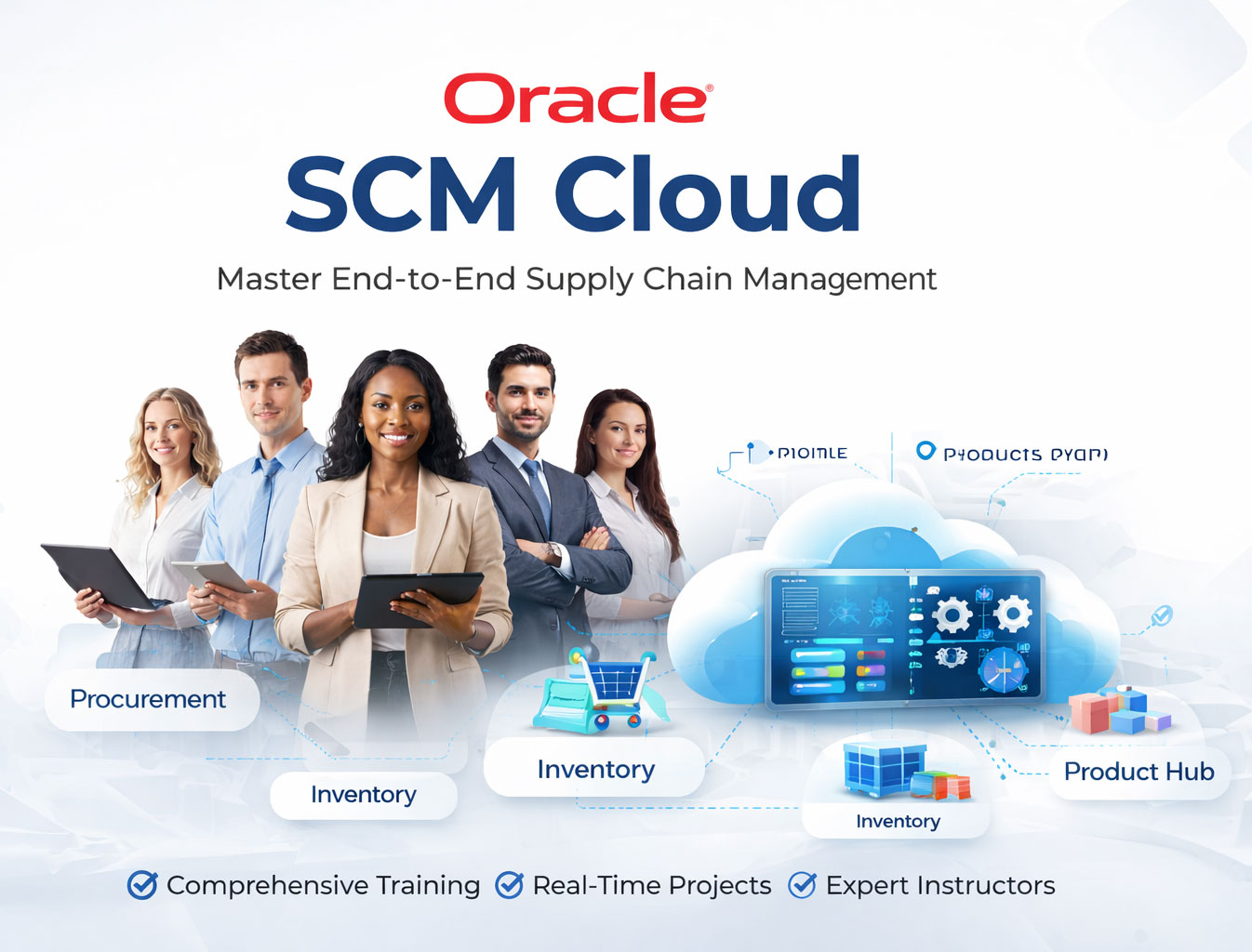
Oracle SCM Cloud (Supply Chain Management) is a comprehensive, integrated suite of applications designed to manage and optimize end-to-end supply chain processes. It enables organizations to efficiently handle procurement, inventory, order management, product lifecycle, and logistics operations on a unified cloud platform.

Our Oracle SCM Cloud training program is designed to provide in-depth functional knowledge with real-time scenarios. Whether you are a beginner or an experienced professional, this course helps you understand core modules like Procurement, Inventory, Order Management, and Product Hub with practical implementation.

With hands-on training, live projects, and expert guidance, we ensure you gain the skills required to work on real-time Oracle SCM Cloud implementations and enhance your career opportunities in the ERP domain.
About image

Introduction to Oracle SCM Cloud - I

1. Introduction
  • Introduction to Oracle Cloud
  • SAAS, PAAS and IAAS Overview
  • Oracle SCM Cloud Capabilities: Overview
  • Navigation Basics
  • Resources
2. Functional Setup Manager & Quick Setup
  • Implementation Planning
  • Roles and Responsibilities
  • Offerings
  • Implementation Considerations
  • SCM Simplified Setup: Overview
  • Automated Setup of SCM Common Components
  • Simplified Setup: Time Savings
  • Best Practices
3. Enterprise Structure Overview
  • Walkthrough on Enterprise Structure
  • Differentiate E-Business Suite and Cloud Org Structure
  • Business Unit Overview
  • Business Unit Implementation


Product Data Hub Cloud Implementation

2. Introduction to Function Setup Manager
  • Functional overview of Functional Setup Manager
  • Roles and responsibilities
  • Implementing a Product Hub offering using Functional Setup Manager
3. Performing Initial Setup for Creating Items
  • Creating item organizations
  • Item class concepts
  • Creating item classes
4. Data Discovery – Creating Items
  • Item terminologies
  • Item setup tasks
  • Creating items
  • Implementing item relationships
5. Setting up Item Attributes
  • Item attributes
  • Defining and assigning EFF attribute groups
6. Creating Catalogs
  • Overview of catalogs and categories
  • Creating catalogs
7. Performing Item Mass Updates
  • Item Mass update functionality
  • Item class updated through excel
  • FBDI based Item Conv
8. Creating Structures
  • Overview of structures
  • Creating a product structure
9. Setting Up New Item Requests
  • Overview of new item requests
  • Configuring new item requests
  • Creating and managing new item requests
  • Change Order Approval Workflows
10. Defining Item Rules
  • Overview of item rules concepts
  • Creating item rules


Inventory Management Cloud Implementation

1. Inventory Overview
  • How Inventory Fits into Oracle’s SCM Cloud Offering
  • Oracle’s SCM Cloud Progress
  • Oracle Inventory Management Cloud Capabilities: Overview
2. Inventory Transaction Setup
  • Inventory Transaction Uses
  • Inventory Transaction Sources and Types
  • System- and User-defined Inventory Transaction Types
  • Inventory Transaction Setup Tasks
  • Inventory Transaction Profile Options
3. Lot and Serial Number Control
  • Lot Control: Overview
  • Lot Control Organization Parameters
  • Lot Control Item Attributes
  • Lot Management
  • Serial Number Control
  • Lot and Serial Number Control Profile Options
4. Inventory on Hand and Availability
  • On-Hand Quantity and Availability
  • Manage Item Quantities Page
  • Reservations
5. Issue and Transfer Material
  • Inventory Transactions: Overview
  • Miscellaneous Transactions
  • Subinventory Transfers
  • Movement Requests
  • Direct and In-Transit Interorganization Transfers
  • Transfer Orders
6. Warehouse Receiving
  • Receiving: Overview
  • Receipt Routing
  • Receipt Processing Methods
  • Expected Receipts
  • Receipt Structure
  • Returns and Corrections
  • Additional Receiving Features
  • Receiving Parameters
7. Plan Inventory Replenishments
  • Explain Min-Max Planning
  • Min-Max Planning Report Parameters: Points to Consider
  • Min-Max Planning Replenishment Quantities: How They Are Calculated
  • Replenishment Order Generation
8. Perform Cycle Counting
  • Cycle Counting: Explained
  • ABC Analysis
  • Create and Manage Cycle Counts
  • Generate Count Schedules
  • Generate Count Sequences
9. Manage Physical Inventories
  • Analyze Materials Management and Logistics Performance
  • Monitor Warehouse Operations Dashboard
10. Introduction to Cost Management
  • Overview of Cost Management
  • Cost Planning
11. Setting Up Cost Org and Perform Costing
  • Creation of Cost Organization
  • Creation of Cost books and Valuation Structure
  • Manage Cost Elements and Cost Profile
  • Demo on the Costing method


Oracle Procurement Cloud Implementation

1. Procurement Application Overview
  • Explain Procurement architecture and components
  • Explain simplified Procure to Pay flow
  • Explain Procurement applications integration
2. Set Up the Procurement Common Functions
  • Identify common procurement tasks
  • Configure required common procurement tasks
  • Identify common purchasing tasks
  • Configure the required common purchasing tasks
3. Define and Manage Suppliers
  • Explain the purpose and use of Supplier Model within Fusion Procurement
  • List the benefits provided to suppliers by Fusion Supplier Portal
  • Explain the methods available for registering suppliers
  • Identify the job roles available to the supplier self-service administrator to provision
  • Implement Supplier Model and Supplier Portal
4. Define Approval Management
  • Understand the approval management workflow
  • Set up approval management
  • Understand approval policy configuration
  • Describe steps for defining approval groups
  • Manage, edit, and deploy approval rules
  • Create approval rule conditions
5. Manage Purchase Orders
  • Understand the components and use of purchase orders
  • Create purchase orders
  • Maintain purchase orders
  • Understand setup options related to purchasing orders
6. Administer Procurement Catalogs
  • Identify Self Service Procurement setup tasks and profile options
  • Manage value sets and descriptive flexfields for information templates
  • Create, manage, and secure catalogs
  • Understand Supplier Content Map Sets
  • Create local and informational catalogs
  • Create and manage public shopping lists
  • Create and manage smart forms
  • Understand content zones
7. Manage Requisitions
  • Understand the basics of requisition management
  • Manage requisitions
  • Create and modify approved orders
8. TAB
  • Charge Account
  • Variance Account
  • Accrual Accounts


Order Management Cloud Implementation

1. Introduction
  • Course Introduction
  • Oracle Order-to-Cash Cloud Overview
  • Demo with a Standard Order – O2C Cycle
  • Demo with Return Order
2. Pricing
  • Pricing Strategies
  • Price Lists
  • Discount Lists
  • Shipping Charge Lists
3. Order Promising
  • Global Order Promising
  • Order Promising Rules
  • Key Order Promising Functionality
  • Data Collection and Global Order Promising Administration
4. Orchestration
  • Defining Orchestration
  • Managing Orchestration Statuses
  • Change Management and Process Assignment
  • Orchestration Process Planning, Deployment, and Jeopardy
  • Defining Processing Constraints and Hold Codes
5. Shipping
  • Introduction to Shipping
  • Shipping – Basic Setup
  • Pick Wave Management
  • Pick Confirmation
  • Ship Confirm
6. Reporting and Business Intelligence for SCM
  • Explain Reporting and Business Intelligence for SCM
  • Configure OTBI , RTF Templates for Trading documents, Dashboard metrics